Brain and ENT Clinic – Dr Lalit Mahajan In Nagpur & Dr Rachna Gangwani Mahajan In Nagpur
Spinning Sensation: The primary symptom of vertigo is the perception of spinning, swaying, or tilting, either of yourself or the environment.
Nausea and Vomiting: Vertigo is frequently accompanied by feelings of nausea, and in some cases, it may lead to vomiting.
Unsteadiness or Imbalance: People with vertigo often feel unsteady on their feet and may have difficulty maintaining balance.
Sweating: Profuse sweating is a common symptom associated with vertigo episodes.
Headache or Migraine: Some individuals may experience headaches or migraines in conjunction with vertigo.
Hearing Changes: In certain types of vertigo, particularly those related to inner ear disorders, there may be changes in hearing or the perception of ringing in the ears (tinnitus).
Eye Movements (Nystagmus): Abnormal eye movements, called nystagmus, often accompany vertigo. These involuntary eye movements may be horizontal, vertical, or rotary.
Visual Disturbances: Vertigo can cause visual disturbances, such as blurriness or difficulty focusing.
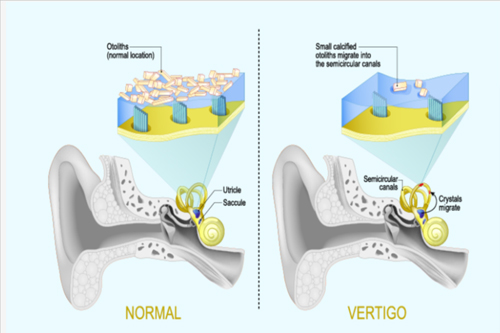
Inner Ear Disorders:
Central Nervous System Disorders:
Medication Side Effects: Certain medications may cause dizziness or vertigo as a side effect.
Dehydration or Low Blood Sugar: Lack of fluids or low blood sugar levels can contribute to dizziness.
Infections: Infections affecting the inner ear or the central nervous system can lead to vertigo.
Injury or Trauma: Head injuries or trauma to the inner ear can result in vertigo.